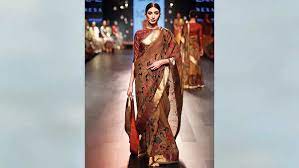
Unveiling Kalamkari: A Glimpse into the Craft
Originating from the Persian language, the term ‘kalamkari’ beautifully translates to ‘pen worked.’ This ancient and intricate craft involves the hand painting and block printing of textiles. Within this art form, one can find a mesmerizing display of intricate motifs, scenes from epics, and delightful floral patterns. Kalamkari is renowned for its rich color palette and unwavering attention to detail. The process unfolds through approximately 23 meticulous steps.
Nature’s Palette: The Colors of Kalamkari
A striking characteristic of Kalamkari is its exclusive use of natural colors and vegetable dyes, which breathe life into earthy tones. This magnificent craft predominantly thrives in the heartland of Andhra Pradesh, with its main centers of excellence situated in Kalahasti and Machilipatnam. Designer Archana Jaju, an ardent advocate for Kalamkari, has dedicated years to its revival and propagation.
Kalamkari 2.0 – A Contemporary Spin: Reinventing Tradition
Pioneering designers like Neeta Lulla and Gaurang Shah have embarked on a journey to revive and rejuvenate Kalamkari, making it more appealing to younger generations. Their innovative approach includes experimenting with various shades and an array of fabrics. In an artistic twist, they introduced “reverse Kalamkari,” where vibrant shades like orange and yellow boldly juxtapose against a black backdrop. One of their remarkable collections drew inspiration from the narratives etched within the thirty frescoes of the Ajanta and Ellora Caves, infusing new life into ancient tales.
A Fusion of Tradition and Modernity: Bridging Generations
This revival extends to a diverse range of fabrics, seamlessly blending tradition with contemporary sensibilities. Fabrics such as Kota silk, Munga silk, organza, and more have found their way into the tapestry of Kalamkari, adding intriguing textural dimensions. Moreover, Kalamkari is not confined to saris and dupattas alone; it gracefully ventures into fusion and western wear, transcending age barriers and inviting individuals from all generations to savor and embrace this timeless craft. This modern approach holds particular appeal for younger enthusiasts, making Kalamkari more accessible and relevant to them.
Facts and Fascination: The Intricacies of Kalamkari
Kalamkari encompasses two distinct styles – Srikalahasti and Machilipatnam. Srikalahasti involves freehand drawing, meticulously filled in with vibrant hues, while Machilipatnam relies on designs hand-carved onto blocks.
The traditional Kalamkari process unfolds in 23 intricate steps. This artistic journey commences with fabric bleaching, followed by a softening process, sun-drying, and the painstaking hand-painting phase. The concluding steps encompass air drying and washing, ensuring the longevity of this art form’s vibrant colors. Kalamkari artists ingeniously employ natural preservatives, coupled with natural dyes. Surprisingly, unconventional yet effective substances like milk and cow dung play a vital role in preserving the vibrancy of colors over time – a testament to the ingenuity and resilience of this ancient art form.
The Healing Fabric: Kalamkari’s Profound Significance
Kalamkari is often referred to as the ‘healing fabric.’ Each pattern within Kalamkari carries a unique meaning, serving as a medium to convey distinct messages. The fusion of artistic beauty and storytelling weaves a tapestry that has transcended centuries, captivating the imagination of those who behold it.